Thursday, 17 December 2009

'The Baptism of Jesus' at St Edmunds Tyseley


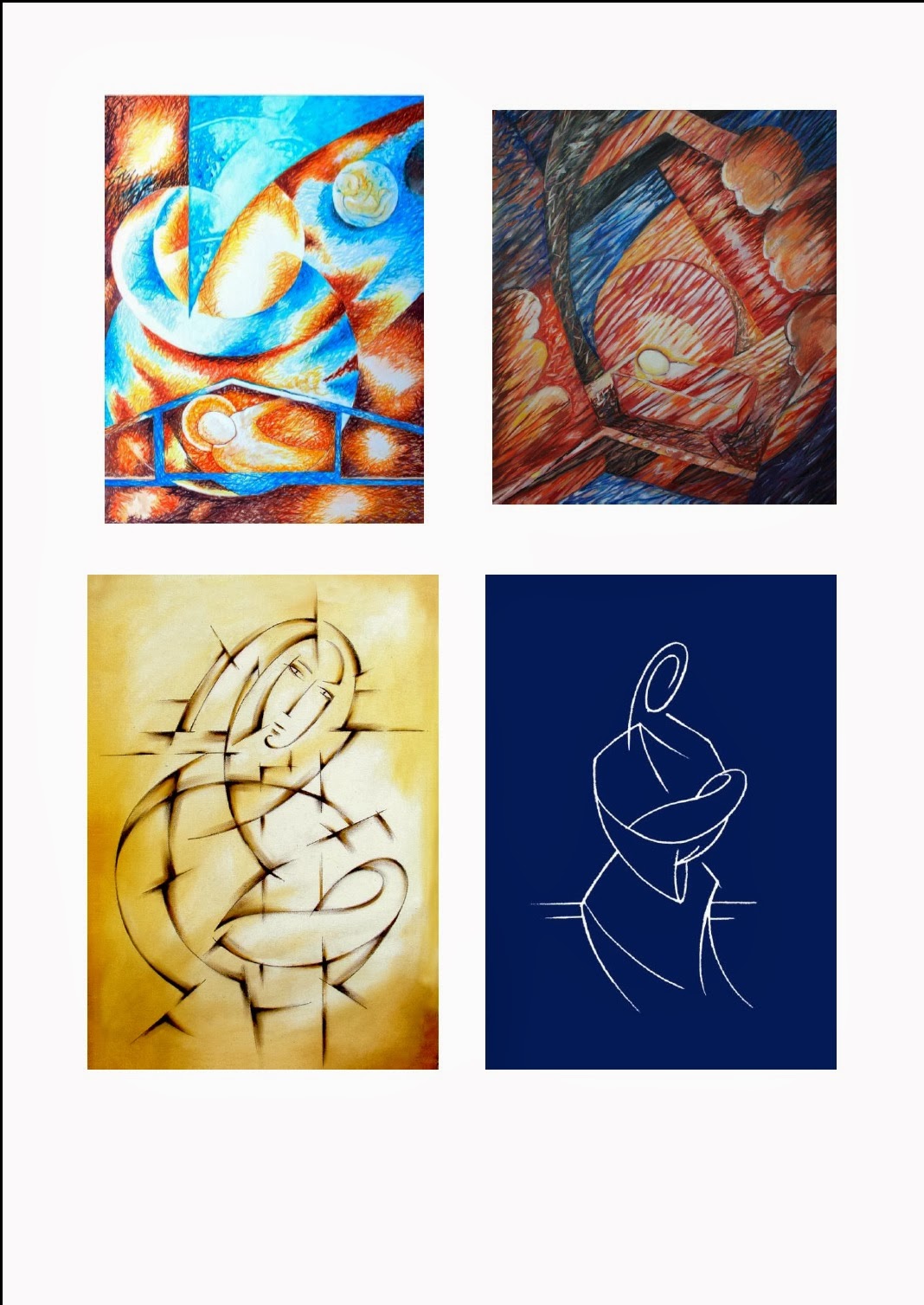
The Baptism of Jesus by Rosalind Hore is to find a permanent home in 2010 at St Edmund's Tyseley. The painting is to be donated to the Birmingham-based church by Jonathan Evens as a memorial to his father, Revd. Phil Evens, who spent 10 years in Tyseley as Vicar of St Edmunds.
The painting was chosen by the congregation from a selection of works by commission4mission artists which were provided by Jonathan.
Revd. Steve Simcox, Vicar of St Edmunds, says, "I think this painting will be very special in St Edmund's Church. We plan to mount the painting ... so the prominent thing that is seen as you enter the church is the painting."

Tuesday, 15 December 2009

commission4mission catalogue


Our newly produced catalogue briefly tells our story and profiles our current artists showcasing the wide range of media and styles which can be commissioned from our artists.

The catalogue includes the following article on the 'Challenges of Church Art' by The Revd Jonathan Evens, Secretary of commission4mission:

Local churches contemplating the possibility of commissioning contemporary art are often put off by what they think will be prohibitive costs, disputes in the congregation about appropriate styles, and arguments that there are more important priorities for the available money.
Since the midpoint of the twentieth century, cathedrals in the UK began, once more, to regularly commission contemporary art but, for the reasons listed above, local churches have rarely followed their lead. commission4mission is a new arts organisation which is seeking to change this, primarily by making the commissioning of contemporary art an opportunity for mission and a means of fundraising for charities.

The visual arts can contribute to mission by speaking eloquently of the Christian faith; providing a reason for people to visit a church; making a link between churches and local arts organisations / initiatives and providing a focus around which local people can come together for a shared activity. A good example of this is St Albans Romford, where commission4mission was launched in March 2009. As a direct result of its many commissions the church is regularly visited by those from the local community - and further afield - who come to see Christianity differently through their visit.
When the visual arts are seen as integral to mission, then the interest of congregations in commissioning is likely to grow - but the issues of cost and competing priorities remain. As a result, commission4mission is building up a pool of artists from a range of different disciplines all of whom are able to work flexibly to available budgets and are willing to allow a proportion of the cost of each commission to go to charity. commission4mission also facilitates a process by which commissioned artworks can be donated to churches as memorials to loved ones.
Our experience suggests that this combination of charitable fundraising and memorial donations overcomes many of the issues usually faced when considering the commissioning of contemporary art for local churches. And, none of this means that quality is being compromised either. In the words of Henry Shelton, a founding artist member of commission4mission, what we offer is "quality work and craftsmanship, rather than mass-produced work, to continue the legacy of the Church as a great commissioner of art."

For the artist, however, a very different set of challenges exists as a result of church commissions. All churches, regardless of age and style, provide an existing space, which is coupled with a history (recent or ancient) that includes architecture, existing art, and community memories. The artist, and the finished artwork, has to relate in some way to the space and its history, either integrating within it or challenging what already exists through its difference.
Christianity, too, comes with a history and visual heritage with which the artist and the finished artwork must interact. Questions must be asked. Will the artist work with traditional Christian imagery or iconography? Can a legitimate contemporary approach be found to traditional iconography? Can new and contemporary symbols be found for the traditional images and doctrines of the Christian faith?
Each of our artists has one or more solution to these questions. Contrast, for example, the expressionist style of Rosalind Hore’s The Baptism of Christ with the semi-abstract minimalism of Henry Shelton’s engraved window on the same theme at All Saints Goodmayes. Both work with traditional iconography but to very different effect; Hore conveys a sense of Christ caught up in an ecstatic union within the Trinity, while the simple elegance of line and minimalism of imagery in Shelton’s design suggests the ease with which those at the time could have overlooked the significance of this event.

As part of this dialogue, all artists also face the question, ‘What is Christian art?’ In the past, this question was easily answered. Christian art was simply art for churches created under the patronage of the Church, by artists in communion with the Church, and using the iconography of the Church. Today, there is no easy answer to this question for several reasons: artwork using traditional iconography could be created for church or gallery; the Church is no longer a major patron of the visual arts; traditional iconography can be utilised by artists in order to be subverted or challenged; artists exploring spiritual themes could be people of faith, or not - and may - or may not - use traditional iconography.
Today, all of the old certainties regarding Christian art can be questioned. commission4mission, though, by focusing primarily on encouraging the commissioning and placing of contemporary art in churches largely returns to the earlier understanding.
And finally, let us not forget that, in addition to their dialogue with space, history, and iconography, artists commissioned by churches are also in dialogue with people. Most commissions will involve the artist in relating to a group of church members, and possibly to some advisory body (such as the Diocesan Advisory Committee in the Church of England system). Relating to the different tastes and appreciations of the visual arts, and to differing understandings of the role of the artist among those liaising with the artist on behalf of the church, make this dialogue one of the most challenging for the artist - and can lead to a concern that art is being created by committee and vision diminished as a result.

In writing of the “passionate and intelligent understanding of the arts in the service of the Church” that was demonstrated by Bishop George Bell (Bishop of Chichester, 1929 - 1958), Canon Keith Walker sets out a model for an ‘ideal’ relationship between church and artist (K. Walker, Images or Idols? The Canterbury Press Norwich, 1996). Bell argued, “The Church should dictate the subject-matter whilst the artist should decide the style;” and that “Today’s artists (should) be employed to paint in our churches, not in a style imitative of the past, but in the idiom natural to them;” and lastly “The Church … must be prepared to trust its chosen artists to begin their work and carry it through to the end as the fulfillment of a trust, the terms and circumstances of which they understand and respect.”

Monday, 30 November 2009

Perspectives on commissioning Christian Art (4)


The Rt. Revd. David Hawkins, Bishop of Barking, spoke at commission4mission's recent Study Day from the perspective of those envisioning others on the commissioning of contemporary art for churches:

"All human beings are made in the image of God; everyone has creativity within them and, for Christians, that creativity becomes part of their worship whether conscious or not.
If we think of worship as liturgy, music, preaching etc, then we can see that much of the Church's worship and teaching has been through the visual arts. Teaching was, for example, read in stained glass, frescoes and mosaics. We need to help our congregations recognise that a large part of worship is non-verbal and that the visual arts and music often move people more than words. It is, after all, a visual world we live in.
commission4mission is deliberately saying that commissioning art is a mission activity and that is necessary because the narrative of the christian faith is no longer in people's heads. As a result, we need to make the story visual once again.
This Study Day has included discussions about finance and we need to face the question of whether commissioning art is an indulgent project in recession time. Times of recession, historically, have been when the Arts have flourished as we have a need for hope and inspiration. Modest expenditure can produce real inspiration.
Numbers 21. 4-9 is about the first piece of public art in the Judeao-Christian tradition; an artwork that was transformative and healing. The bronze serpent had a transformational integrity with the people of God in a particular place and started me thinking about God and context. It has similarities to the Angel of the North; which has been a symbol of inspiration in a depressed part of the country.
Two examples of collaborative commissions may help in taking these thoughts further. These were modest projects coming out of encounter with God and the people of St Georges Leeds. The first involved a major reordering during which Victorian balconies were taken out to reveal huge lancet windows with blank glass (where the balconies had been) above the stained glass (which had previously been all that could be seen of the windows).
I designed a panel to complete the Victorian stained glass which was contemporary but harmonising and worked with a stained glass artist to realise the design. The window was the culmination of a year of teaching to commemorate 150 years of the church. The theme for the window - the Tree of Life - was obvious because the theme of the year had been roots and shoots. The simple stylised design had a context and a sense of focusing and summarising an important year in the life of the church.
The second project involved the Crypt of St Georges which, since 1930, has been a night shelter and day centre for homeless people. Refurbishment of the Crypt involved replacement of the boiler and the clearing out of the old Victorian boiler room; a beautiful and still vaulted space. On seeing it cleared out, I immediately said it had to be a chapel and place of prayer for the Crypt.
Steve Simpson was the artist commissioned to create a work on a Last Supper theme with the work intended to be seen above a bench running all around the room and seating 12 comfortably. We envisaged a mural or a set of paintings but found that alot of collaboration - between the artist, Vicar and homeless users of the building - was needed to squeeze out something inspirational.
Steve brought cartoons of his ideas based on photographic images of the Crypt's users. These were rectangular paintings which made the space look like a gallery rather than a worship space. I suggested tearing the paintings up which he initially said he was not going to do but, after half and hour of debate, he started to tear around the images and they became like historical artefacts emerging as fragments from the walls. The time and agony of time taken on the problems of a committee relating to an artist; this process became part of the work of art. Because of the process, the work was altogether different but integral to the church space. It is therefore important to argue but to still stay friends.
These stories lead me to three final points:
1. The importance of collaborative process and finding real creativity which allows people to feel that their signature is there.
2. The scope for temporary art in churches which reflects a particular generation and period. We can all think of paintings or stained glass that have served their useful life but which can't be easily removed. Art can be for that time alone and can be created with the expectation that it will later be taken down. This approach can help to keep the relationship between art and faith alive and vital. It is similar to music, where some hymns go on forever while others go out of fashion.
3. Encouraging all kinds of people from our communities - not just Christians - to bring visual expressions into church, as a missional and outreach activity."

Nadiya Pavliv

Joy and Sorrow

Trinity

Nadiya Pavliv is a student of Middlesex University in the final year of a BA Fine Art degree course. Her interests are in traditional oil painting and moving images or film. During 2005 she was apprentice to Clarence Crawford; where she learnt traditional oil painting technique with a particular emphasis on portraiture.

The aim of her creative practice is to convey to a viewer the message of unconditional love that connects us all and more importantly unites us with the Creator. Contemporary scientists armed with the latest equipment come to realise that the law of our universe is guided by what they call ‘Intelligent Mind’; who we, as Christians, believe to be God. Nadiya is very interested in researching more into this invigorated and transformed present dialogue between Religion, Science and Art.

As a member of the Waltham Forest Art Club since 2006, she has taken part in many exhibitions and events organised by the Club.

Wednesday, 25 November 2009

News update


Our catalogue of current commission4mission artists has just gone to print. The cover can be seen above. The catalogue features a foreword by our patron, the Bishop of Barking, an introduction to commission4mission, an article on 'Challenges of Church Art', profiles of each of our current artists, and a listing of c4m commissions and exhibitions.
Our showcase exhibition at Chelmsford Cathedral is featured in the December edition of The Month under the heading 'Ambitious artists' group celebrate cathedral show'. This edition of The Month also features the Tree of Life season at St Andrews Leytonstone as part of their Reflect arts programme. Tree of Life included workshops by c4m artists Mark Lewis and Peter Webb.

Peter Webb is also exhibiting in the 76th Annual Exhibition of the National Society of Painters, Sculptors & Printmakers at the Menier Gallery. The exhibition ends on Saturday 28th November and was opened by the Bishop of Barking.

Sarah Ollerenshaw is exhibiting in the Winter Open Art Studios Show at Wimbledon Art Studios from 26th - 29th November.

Jonathan Evens' talk on The Art of Life for the annual 'At Home' Service of the Mothers' Union and Women's Fellowship at St Margaret's Barking can be found by clicking here. The service included a collection which raised £45.00 for the work of commission4mission.

Perspectives on commissioning Christian Art (3)


Dr. James Bettley spoke at commission4mission's recent Study Day from the perspective of those advising on the commissioning contemporary art for churches:

Commissioning contemporary art for a church is just about the most difficult thing that a PCC may have to do. It is in a different league from most other decisions because of the element of choice and the sense that it involves discretionary spending. In addition, those involved are unlikely to have had any previous experience of commissioning or to know the world of arts and crafts. As a result, they are likely to need all the advice they can get.

Within the Church of England there is not much that a church can do in this area without getting a faculty. Faculties ensure that: buildings and contents are kept in the best condition for future generations; work is done to a good standard; and wardens and incumbents are protected from personal liability.

Discussion with the Diocesan Advisory Committee (DAC) is therefore essential and their role is to advise everyone involved in the application, from the PCC to the Chancellor who ultimately grants the faculty. DACs have been nicknamed the 'Damned Awkward Committee' but they actually exist in order to show parishes what can be done.

The DACs first reaction to a commission application will be, "Fantastic, tell us more." The DAC Design Awards encourage churches to use individual artists and craftspeople. St Albans Romford is an example of a church going down this route and, as a result, gaining many awards. Commissioning original work may be more expensive but will give better value for money in terms of pleasure and quality, so the DAC is favourably disposed towards commissioning and will steer parishes down this path.

The issue of whether to commission original work or to purchase wares from a Church furnishing company derives from the development of Church furnishing companies in the nineteenth century. Their establishment was a reaction against indiscriminate gifts that churches had felt obliged to accept. Churches should set standards as to what can be given and steer donors towards those items that are needed by the church.

William Morris said, "Have nothing in your homes that you do not know to be useful or believe to be beautiful." What is useful in church can also be beautiful, and perhaps should be as churches are special public buildings. Over the years, churches often accumulate artworks but these are often overlooked, taken for granted and unrecognised because they have not been gathered together and sensitively displayed as with works in a museum or gallery. Churches have much to learn from galleries and museums which are warm, dry, sensitively lit and containing interpretation of the works displayed. Revd. Ernest Geldart of St Nicholas Little Braxted said that, "God's house ought to be the finest house and most beautiful house in the parish."

How can we determine what is beautiful though? DAC members have a range of relevant experience to draw on in providing advice. Because they have a great deal of joint experience, they have a good idea of what will work well.

Stained glass is particularly tricky because a cartoon cannot depict colours in light or the absence of light. The essential thing is to look at a range of each artist's work. Advice can also be given on framing, lighting etc; again all in consultation with the artist. There is no point in commissioning if too tight a brief is given to the artist. The CHURCHart website has a directory of artists and is a useful source of information. Don't rush into a commission, look around before commissioning a specific artist. Some areas hold open days for artists which it can be useful to attend. Despite all this alot of art in churches is mediocre.
In the nineteenth century, when much church building and restoration was undertaken, it was considered essential that the architect had to have a faith. Artists in earlier times were also devout Christians. However, those who are not Christians can nevertheless produce work that is appropriate for churches. We have a tendency to select artists on the strength of their faith meaning that those in the pool of artists with a faith tend to do more and more work for churches. We should consider that good artists are not necessarily good Christians and good Christians not necessarily good artists.

Sunday, 15 November 2009

Valerie Dean

Behold the Man

Annunciation in the City
Valerie Dean came back to England, in the summer of 2007, after living for 27 years in Belgium. There, she studied art for six years and had various exhibitions, in and around Brussels. On returning to England, she became involved in the Kent arts scene and exhibits, regularly, in the Francis Iles gallery, in Rochester. She has also taken part in the Canterbury Arts Festival and exhibitions in Whitstable.

She work in acrylics and her technique is usually to put materials and colours on canvas or board, to see what emerges. It is a dialogue between the artist and her materials. Because of her background, this often consists of figures around a religious theme. They just appear! Very often, people seem to want to appear in her paintings, a little like the pictures in the fire that she used to see in her childhood. At other times, she finds that buildings and places she knows inspire her.